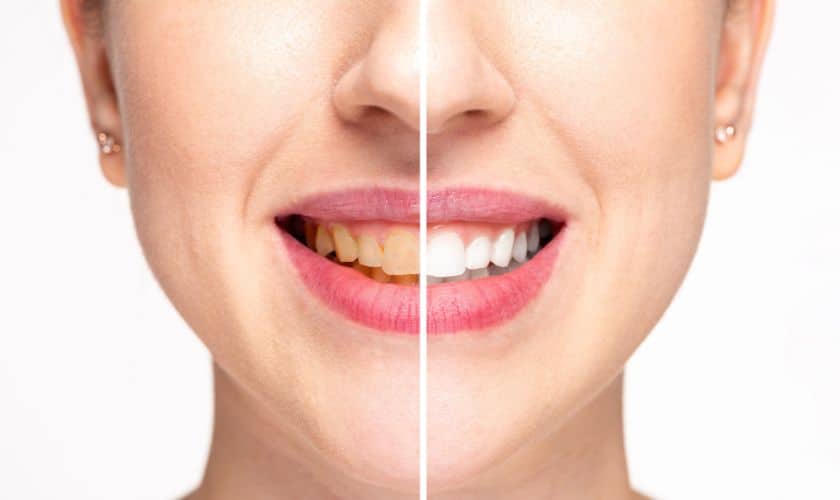
A bright, white smile is often associated with good oral health and an aesthetic boost. As the popularity of teeth whitening procedures continues to rise, it’s essential to navigate the journey with an understanding of the delicate balance between achieving a dazzling smile and maintaining optimal oral health.
In this post, we delve into the synergy between teeth whitening and oral health, emphasizing the importance of striking the right balance for a radiant and healthy smile.
The Appeal of a Whiter Smile
Boosting Confidence:
A brighter smile can significantly enhance one’s confidence and self-esteem, fostering a positive self-image.
Aesthetics and Social Perception:
A white smile is often perceived as a symbol of good hygiene and overall well-being, influencing social interactions and first impressions.
Anti-Aging Effect:
Whiter teeth are associated with a more youthful appearance, contributing to the desire for teeth whitening among various age groups.
Understanding the Teeth Whitening Process
Types of Teeth Whitening:
In-office procedures and at-home kits are common methods for teeth whitening. In-office treatments often use stronger bleaching agents for quicker results, while at-home kits provide a more gradual approach.
Bleaching Agents:
Hydrogen peroxide and carbamide peroxide are common bleaching agents in teeth whitening products. These agents break down stains into smaller particles, making the teeth appear whiter.
Considerations for Sensitivity:
Some individuals may experience tooth sensitivity during or after teeth whitening. It’s crucial to communicate any sensitivity concerns with your dentist to explore suitable options.
Striking the Right Balance for Oral Health
Consultation with a Dentist:
Before embarking on any teeth whitening journey, consult with your dentist. A professional assessment ensures that your oral health is optimal for the procedure.
Addressing Underlying Issues:
It’s essential to address any underlying oral health issues before undergoing teeth whitening. Issues like cavities or gum disease should be treated to ensure a healthy foundation for the procedure.
Choosing the Right Method:
Dentists can recommend the most suitable teeth whitening method based on your oral health, preferences, and desired results. Customized treatment plans consider factors such as tooth sensitivity and existing dental work.
Monitoring Teeth Sensitivity:
If you experience sensitivity during or after teeth whitening, communicate with your dentist. They can provide recommendations for managing sensitivity and adjusting the treatment accordingly.
Regular Dental Check-Ups:
Incorporate regular dental check-ups into your oral care routine, especially after teeth whitening. These appointments allow dentists to monitor your oral health and address any concerns promptly.
Maintaining Good Oral Hygiene:
Teeth whitening is most effective when combined with a consistent oral hygiene routine. Brushing, flossing, and regular dental cleanings contribute to a healthy and vibrant smile.
Conclusion:
Teeth whitening, when approached with a focus on oral health, can result in a stunning smile without compromising the integrity of your teeth. The key lies in finding the right balance through professional guidance, personalized treatment plans, and a commitment to maintaining good oral hygiene. Striking this equilibrium ensures that your journey to a whiter smile aligns seamlessly with the foundation of optimal oral health, providing you with the best of both worlds – a radiant smile and lasting dental well-being.